Monday, September 26, 2022

DO YOU REMEMBER THINGS YOU WROTE ON YOUR FRIEND'S AUTOGRAPH BOOK?

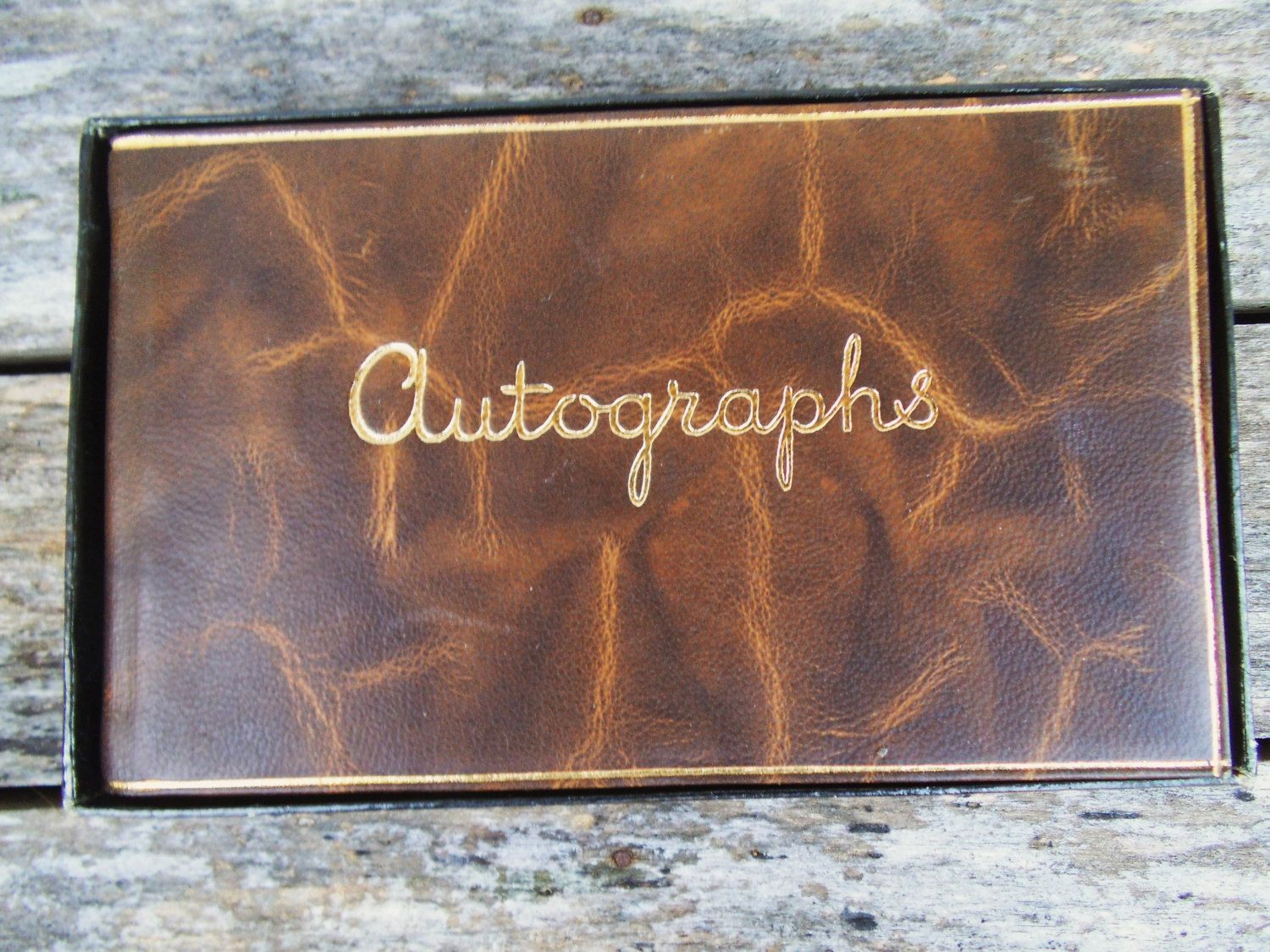
Signing the autograph was one signs of friendship among youngsters in the 60s and 70s. I managed to get a copy of an old Autograph from some friends upanga in Dar es Salaam, this is what was written on the pages of the  Autographs ......THOSE WERE THE DAYS MY FRIENDS........

No 1

Drink: Coke
Food: Ugali
Clothes:boo-ga-loo
Singers: James Brown
Showbiz Personalities:Guliano Gemma
Records: The Chicken
Girl: "X"
Boy:Groove Maker
Place: Mchikichi
Best Ambition: Music (Drumer)

No 2

Drink: Babycham
Food: Tambi + Rice
Clothes: Pecos(bell-bottom)
Singers: James Brown, Clarence Carter,Otis Redding
Showbiz Personalities:Sidney Poitier,Elvis Presley,Franco Nero
Records: If I ruled the world,Thats how strong my love is, Take time to know her,
Girl: The one who loves me
Boy:Groove Maker
Place: Soulville Upanga
Best Ambition: Secret Agent

No 3
Drink: Fanta
Food: Chapati
Clothes:boo-ga-loo
Singers: Percy Sledge,James Brown
Showbiz Personalities:Fernando Sancho, Lee Marvin
Records: Take time to know her, Sex Machine Blue Transistor Radio
Girl: Fikirini
Boy:Groove Maker
Place: Soulville Upanga
Best Ambition: Electrician

Saturday, September 3, 2022

KITIME FAMILY MOVES TO MBEYA, FROM USWAHILINI TO UHINDINI

 I remember very much the trip to Mbeya, the whole week before that was spent on packing, I think I spent most of the time going around to all my friends telling them I was leaving for Mbeya, and we will be going with my father's car.
 The day before the journey a big lorry came and carried away almost all our belongings. That evening my mother prepared lots of food for the journey. We left Iringa the next day at about ten in the morning and began the trip to Mbeya. My grandfather had been my companion and best friend for almost two years, but I was too excited to be traveling in a car to feel sad about leaving my grandfather. And so the journey began, my father was driving and there was my mother and four of my siblings all crammed in the back seat with my small items that my mother thought they should not go with the other luggage in the lorry. The roads were not the best in those days, just a few kilometers from Iringa the tarmac road ended and that was the condition of the road until again a few kilometers from Mbeya town. But the journey was fun, my parents loved singing, and so we all sang together many songs, my father told us many stories, he was a great storyteller. We stopped somewhere and had a nice picnic with the food my mother had prepared before, after that the journey went on and we reached Mbeya early evening. My father told us he wanted to show us something, he then drove the car past Mbeya Prison and told us that was where he had been imprisoned, he stopped the car and went to greet one of the prison guards who recognized him, and soon they were laughing at something, a few other guards gathered around my father, he then introduced them to us and we went on our way. 

It was already dark when we arrived at our new home, it was a big house, with glass windows, and a big main glass door. The house even had electric lights, and water flowing from the faucets, this was beyond my wildest dreams living in a house like this, I was so anxious to see what the neighborhood looked like. 

The first time I switched on an electric light was the year before (1963) in Iringa. I had gone to visit David Mwaibula's home, they were staying in Uzunguni area opposite the Anglican Church. He showed me how to switch on the light, it was an exciting experience. At the time back at my grandfather's house we mostly used the hurricane lamp, although my grandfather had a kerosene pressure lamp which he used in his room. 

Kerosene Pressure Lamp

Hurricane Lamp

The next morning I was up before sunrise, and the first thing I noticed, was it seemed the sun was rising from the wrong direction!!. Then I noticed that all the houses in our street were of the same design but all were in different colours, and the street was very quiet. 

Everything was different from my sweet Barabara Mbili Street in Iringa, I went around the house it was the nicest house I had ever seen. By the end of the day, I found out that most of our neighbours were Asians.  Apart from the Asians, there was a house next to ours where a number of freedom fighters were living. We called them Wakimbizi at the time. One of them was called Kamjuji, he was very dark, even the palms of his hands were black, but I came to like him because he was very friendly and would give me nice South African magazines with lots of pictures. And he also had a guitar which he allowed me to play whenever I wanted. On the opposite side of our house,  there was a house where there was a mechanic who also owned a number of  Vauxhall Viva taxis. He was known as Baba Shukuku, Shukuku became one of my best friends. The main bus stand in Mbeya is where Baba Shukuku's house used to be. And just nearby there was a half-cast family with a beautiful daughter called Salama.  

My mother with other female teachers, and the Headmaster Mr. Lohar. From left, Mrs. Dhawan, Miss Maier( American peace corp), Mrs Mshiu, Miss Manji, Mr. Lohar the Headmaster, my Mother Mrs. Kitime, Mrs Massawa and my class teacher Miss Hirji (1965)

My two young sisters and I were enrolled in the  Mbeya Aga Khan Primary School, and my mother got a job as a teacher in the school. It was an English Medium school with very few Waswahili, and I had just come from a full Kiswahili school. The fun was about to begin. 


Friday, August 26, 2022

CONSOLATA PRIMARY SCHOOL THE LAST DAYS


My mother started working as a social welfare officer sometime in 1961, she was famously known as Mama maendeleo, she managed a number of women’s groups in Iringa town, she would also teach them a variety of handcrafts and with a little help from the Government, the groups would get a bit of funding and produce beautiful things they would sell and make a living. My mother’s best friend was Biti Yusuph, it seems like they were always together. I loved visiting Biti Yusuph's home, she always had something to eat sometimes even rice and meat, and sometimes she would even give me five or ten cents, and I would suddenly be very rich. With that money I mostly just spent it on sweet things, Toffees, brown sugar, which you could get either the hard type or the soft  sticky type we  called Ganduu.


Money wasn’t much of a concern because I don’t remember lacking anything. But there were a number of money making ventures that I involved myself in, mostly for fun, not so much for financial reasons. On the other side of town, was the area  that was known as Uzunguni, European area, because that’s where the Europeans used to live, there was a bakery run by a Greek. He would throw away loaves of bread which had not been sold after a certain period. For us these loaves of bread were still very much ok, so we would visit his dump every week and pick the best pieces of bread and eat them to our fill. There was a sisal labourer's camp that was known as SILABU, here young men from the southern part of Tanzania who were on their way to sisal farms in Morogoro and Tanga would make a stop and rest here, we would also bring some of the loaves and sell to them. I don’t remember the price, but we got enough money to buy some of our favorite toys, marbles, and footballs in particular. 


Also as I mentioned earlier money making venture was going to steal mangoes at Itamba during the weekends and selling at school during the week days. It was encouraged to sell stuff at school because some of  the students desperately needed any money they could get, some families were really very poor.   

Before I move on to another phase of my life, I need to say something about cleanliness. Every morning before classes there would be a cleanliness inspection.  While the school band would be playing a song, teachers would be walking around checking personal hygiene of every child, dirty and long fingernails, long hair, uncombed hair, dirty uniforms. A teacher would walk around with a scissors and cut of hair from anyone he thinks has long hair, and another teacher would be going around with a stick checking dirty fingernails, a whack on the finger would befall anyone whose fingers were seen as dirty or long.

We were not allowed to wear leather shoes or slippers. Only canvas shoes. And of course no pull overs or sweaters, however cold it was.

Sweeping the school compound was a daily chore, but the worst was cleaning the toilets. The toilets were very simple type. A trench was dug and cemented on top with several holes made about a meter apart, with no wall in between for privacy, that was called a toilet. And because the trench had no water the toilets would be used the whole day, and the next morning, those whose turn was to clean the toilets would have to use buckets of water to flush all yesterday’s load.
I still shudder thinking of that horrible duty.

Around July 1964, my father had decided that his works station will be in Mbeya. And so we moved to Mbeya.


Tuesday, August 23, 2022

LEARNING ENGLISH WAS NOT EASY


We started learning to read and write in English in class three at Consolata Primary School. We used the New Oxford English Course East Africa Book One. It was not easy learning how to pronounce this and that, it was much easier to say zis and zat,  and it took a lot of beatings to be able to say those words correctly.
I remember a group of student teachers came to our school and one of them taught both class 3A and 3B an English song,  The teacher then held a singing competition between us Class 3A and Class 3B, I remember our comrades 3A won. This is how I remember singing the song, please don't ask me for further explanation about the song;

My way, my wayz cloudy my way

Godsend ze chelenjes down,

Zeaiz Faya in ze is and faya in ze wes, 

Faya in the chelenj down

For God has send his chelenjes down God send his chelenje down

Not lovely

That's that for our English then.

I did not like arithmetic at all, the book we used was Hesabu za Kikwetu book 3, and it seemed that all our arithmetic teachers loved using the cane, which made Arithmetic more difficult to understand. Arithmetic was the reason why I first skipped school.
 We had an arithmetic lesson every day, on Monday the lesson was in the morning, on Tuesday it was in the afternoon.
One Monday morning our teacher gave us homework which we were to submit on Tuesday afternoon. I did not do the homework, I knew that meant getting the cane, so I decided not to go to school on that Tuesday, instead I went down to the banks of Ruaha river to swim and play and spent the whole day there. Back in school one of the teachers asked my younger sister why had I not attended classes that day, she answered she did not know, so she was told to tell my mother that I did not attend school that day.

Ruaha River

The next morning I went through the usual procedures of being a nice boy eager to go to school, although of course, I had no intention of going to school, going to school would mean I would get punished for not doing the arithmetic homework and also for not being in school on Tuesday. Just as I was leaving my mother called me back, and she said ‘Today we are going together to your school, clean my bicycle I am getting ready.' This was terrible news, I knew my game was up. And so we went to school, silently, at school, I was taken straight to the teacher’s staff room. All teachers knew my mother and some were even her friends. The moment they saw me, they started laughing, one shouted ‘Mama Kitime you have brought this hooligan back good, we will straighten him’ One teacher started, ‘I have a class to attend to but please I will give him 6 strokes as soon as I am free’ and he left the office,  another teacher promised to give me twelve strokes and left the office and so on, I could already feel the pain of the beatings om my bottom. And I remember Mwalimu Daudi saying to my mother, ‘Mama Kitime, we need to cane him like they do in prison. We get a piece of cloth and dip it in salt water, that we put on his buttocks and then give him about six canes he will never miss a class again’. The sad thing is my mother was happily agreeing to all those suggestions of practically killing me. After my mother and the teachers discussed several ways that they would torture me to stop me from skipping classes, I was told to go to my class and I will be called later to take my punishment. I don’t know how I got through that day, as I was waiting to be called any minute to go and receive my punishment, nothing ever happened but I was so scared that it was many years later when I was in secondary school did I ever dare to miss classes again.

Consolata Primary School as it looks now, the assembly ground is on the forefront

When I mentioned some of the students I remembered from those days 1963/64 in Consolata, I mentioned a student called Macdonald. I just cannot forget him because of the incident that happened that caused Macdonald and several of his friends to get canned in front of the whole school.
There was this boy called Shaibu, it seems he told some friends that his grandmother had told him that if you can get sand from someone’s footprint and fry it in oil that person will die. This group of boys decided that this was a perfect way to get rid of Mwalimu Daudi, the most feared teacher. So they began tracing him so that they could get his foot print. It seems one of the gang members ‘chickened’ and decided to tell Mwalimu Daudi of the plot to ‘kill’ him.
We were in the middle of classes when the bell suddenly rang, and that meant we were all to assemble in front of the school. Mwalimu Daudi arrived with a bundle of canes, this meant there people who were to be caned in front of the whole school. Who were they? What did they do?, We had never seen such a big bundle of canes being brought at such an assembly.

Mwalimu Daudi stood up and told us the story of these people who were planning to kill him, we were all shocked, a student was first sent to bring a bucket of sand. Then Mwalimu Daudi had the sand spilt and he made a foot print in the sand. Then he announce he was going to call one by one the culprits and after getting six canes they would have to take sand from that footprint and do what they wished with it.
The first guy to be called out was Macdonald, as soon as he heard his name he let out a loud cry and continued to cry out loud, mentioning all his accomplices' names. And they were cries everywhere and the canning hadn’t even started. And so the poor guys got their punishment and were forced to take sand from Mwalimu Daudi’s footprint.


Saturday, August 20, 2022

GOODBYE TO THE OPEN SPACES IN IRINGA TOWN


Jalada la gazeti tulilopewa na kwenye maonyesho ya Wajerumani 1963

In 1963, Iringa had a number of open spaces where we spent our time as children. The biggest was the ground behind the Government Lower Primary School, which is now known as Mlandege Primary School, this was a huge ground because actually it was the first airport in Iringa and that’s where the name Mlandege stemmed from, planes would come from the direction of Tosamaganga or from Itamba side, and it seemed like they were eaten up by the ground. One plane did crash there, and its remains were visible until the late 50s. On these grounds we had lots of football matches, with several teams playing on the huge ground at the same time, there was time the grounds were used for inter school athletics competitions also.
The other open spaces were the neighbouring grounds at Iringa Middle School which was later named Mshindo Primary School. These grounds have a very long history. First they used to belong to the Iringa Gymkhan Club, and there was a football pitch, a cricket pitch and a cement tennis court. The football pitch became the town main football ground after shifting from the Boma  Grounds which I will soon talk about. One of the most interesting football clubs that played on this pitch was Born town Football Club, it was commonly known as  Boni. All the players in the club were born in Iringa town and in particular they had to have been born in Miyomboni and Kitanzini areas. It was a big risk playing with Boni as most of their matches ended up in boxing brawls especially when they lost. I remember even their jerseys were frightening, they wore black jerseys.
The play grounds are now the Samora Stadium. 

Photo taken on 26 April, 1974. In the background are  buildings of Mshindo Primary School, formerly Iringa Middle School before they were razed and Samora Stadiume built. In the picture Indian residents of Iringa performing their traditional dance


The other open space in our childhood was the community center grounds. Some of my sweetest memories of this open space were being taken there by my uncle to watch free mobile films every month. The day started with promotion of different brands of products, from cigarettes to Blue Band margarine. That is where I saw Bwana Msafiri, this was a musician with a trombone who would play and sing the Sportsman promotional song;

Bwana Msafiri mi nasema,
Hakuna sigara inayokufaa.
Ila Sportsman King size
Ile yenye kichungiiiiiii

There would be Coca-Cola drinking competitions, who could finish most Coca-Cola’s in the shortest time, who could eat more bread with Blue Band in the shortest time,  by collecting cigarette packets you could end up winning  a bundle of notebooks. In the evening there would be a film or two of actors with great names like Roy Rodgers, John Wayne, Lawrence and Hardy (Chale Ndute and Chale Mbwambwambwa), Charlie Chaplin and there was someone narrating what was going on.
During the day these grounds would be noisy with children playing on the ‘ mabembea’. Swings, slides and other games for children.
The other open space was ‘Gofu’. There was a European Club, known as Iringa Club, and it owned a vast ground which stretched from behind the present Iringa Library, all way to Wilolesi Primary School. It was a  golf course, with green nicely trimmed green grass and black round spots here and there. That was our ground also when the kites (vishada) season started.

And then there was the open ground between Makorongoni and Mwembetogwa, which was also used a football pitch and used also during the kites season, I think it was owned by the East African Railways as it was surrounded by railway workers’ quarters.

Mwembetogwa grounds


But the most important open space was the Boma Ground. As its name suggests, it was the ground in front of Bomani, the government headquarters. This ground is very old it was Iringa’s first official football pitch, it was on this ground that before Independence, the British army soldiers would hold their parades, and it was on this ground that the Uhuru Celebrations were held.
All the big public celebrations were held here. Once in the early 60s students from Ifunda Technical School built some small beautiful buildings  to show their expertise, and the buildings still stood until recently when they were destroyed by some official order. On this ground again there were children’s swings and slides. There was the  Uhuru fountain on one side of the ground, which  worked very well with water sprinkling out in nice artistic way. When you think of it the colonialist cared for the children more than the present peoples government does.
Maandamano towards Boma Grounds 1964


Government and political national celebrations usually began with maandamano coming from different areas of the town and all meeting at the Boma ground. Schools would come marching with their brass bands leading them, and would also meet at this ground. Each school band trying to out play the other. The school brass bands playing old King African Rifles (KAR) army song, like Tumemkamata Mzungu wa ndege, or the playing the common Ngo ngo ngi twaingilia.
The Iringa Jamat Khana Brass band

At last when everyone had gathered there would be speeches and after that exhibitions from different people, ngomas from different tribes and of course in the evening  ‘gulugulu’ or ‘patapotea’ the dice games would continue.

One of the most interesting event that I remember which took place at the Boma Ground in 1963 was the German mobile exhibition. A convoy of German lorries came to Iringa and parked at the Boma ground for some days and exhibited German products, it was a memorable event, and we were given German magazines to read!!!
We ended up just looking at the pictures.

The Germans' convoy map


Friday, August 19, 2022

1963 FUN AND GAMES AT MAKORONGONI


1963, my mother was busy with her work as Mama Maendeleo (Welfare Officer), her office was at the Community Center in Kitanzini better known as Olofea from the word Welfare, she would wake up in the morning and go to her office on her bicycle, me and my sister would go to school, in those days Saturday was  a working day so on those days sometimes  I would accompany her to work place, it was a fun place to be, many children gathered there, there was a teacher who took care of small  children who  wanted to just  sing and play, his name was Mr Mwambola, and for the older children there were so many games there, boxing, darts, card, some older children were practicing their choir music, the community center was a noisy fun and safe place for the children, all paid and run by the Government .

Back at  Barabara Mbili Street, after school hours we were busy, very busy. Let us take a typical Saturday, the day would start with a bowl of maize porridge with a slice of bread and that was the breakfast. Sometimes while drinking the porridge from afar you would hear,

Kikojozi kakojoa
Na nguo kaitia moto
Kidumbwe ndumbwe
Chalia

 This tune meant some kid in the street has a habit of peeing in bed, so his parents have invited his friends to parade him all over the street, with his wet bed sheets or his sleeping mat. This was a signal to rush out and join the fun.  Children would be joining from everywhere and the crowd got bigger and bigger, and we all ended up at the water stream where the last act is throwing this poor kid into the water. And for the next three four days he would be the butt of all bedwetting jokes. I wonder if that stopped them bed wetting, but I guess it did because I don’t remember seeing the same kid being paraded twice.

Where the Iringa main bus stand is now, used to be a graveyard, even by 1964 it was rarely used, for us that became our playground. We played hide and seek, built our secret hide outs, where we roasted birds we had hunted. When we got tired of playing here we would go down the road past the Mhabeshi’s (The Ethiopian) house to the water stream below to swim. Or we would go to Ilala to the main dump and search look for interesting things to play with. Another important dump was the one near the ‘European School’, St George and St Michael. At this dump we would find beautiful things, sometimes even toy cars, but it was very risky they had watchmen all the time to stop ‘African boys’ getting near the school, but it was always worth the risk.

It was the same with the risk we took going to Itamba to steal mangoes. The families of Nyamwezi a who came as soldiers in the German army, later went to settle at Itamba, and planted a lot of mango trees, now their grandchildren who identified themselves as Wahehe owned these trees, and did not like anyone stealing their mangoes. They had many dogs, but that was not enough to stop us going up those trees, a number of us broke our limbs falling from those trees when being chased by angry owners with their dogs.

One place where we were strictly forbidden to go but went anyway was down at the Ruaha River. We were told many scary stories of children who had sank and died and their bodies never found but that did not stop us going to swim and fish in that river. To go to Ruaha we would take the path that went behind the Iringa Prison and in few minutes we were down the river. We knew all the deep places and stayed away from them. At Ruaha apart from swimming, fishing, there were a lot of wild fruits. And we also went back to town carrying sisal leaves to make ropes with.
Some days we would just play near our home, making small drums using tin cans, singing songs by bands, I remember a particular song by Cuban Marimba Band that we used to play that went like this,

Mpenzi wangu siku hizi

Umenadili nia

Mpenzi wangu siku hizi

Umebadili nia  

One day  my friend Lester and I decided we had to have our own  band just like some schools had. So we first had to get a cow skin. We managed to get 5 shillings from his father, I will not say the story how we managed to get the money but we did, I guess you understand. At the end of the Makorongoni street there was a slaughter house and we went there and with our 5 shillings bought a good cow skin. We first had to soak the skin in water to make it soft so that we could make our drums. We went and soaked it at the stream where we also always swam; we want it to soak for two days so as to become soft enough to make drums. On the first day we checked it and it had started softening, on the second day we went to check it so as to start making our drums, the skin was gone. We started doing some detective work and sure enough a few weeks later we found out who took the  cow skin, but ………….
At one end of the street there was this very quiet guy who never talked to anybody, one day he tried to hang himself, luckily?? The rope he used gave away and he survived, after that we were doubly frightened of him, even though he never bothered anybody we were just scared of his silence and the fact that he had tried to hang himself.
To get make a living, this guy started a nursery school under a tree just near the Iringa Prison, he always looked funny him and his class of hardly ten children, sometimes parading and the children singing the songs he had taught them. Now someone tipped us that this was the guy who stole our cow skin, and sure enough a few days later his school had a set of newly made drums. We didn’t even try to ask him, that’s how scared we were of him.

When I think back, sure enough I wanted to form my first band in 1963.

Thursday, August 18, 2022

1963 AT CONSOLATA PRIMARY SCHOOL STD THREE

Barabara Mbili Street

 So in November 1962, our family moved to Makorongoni, Barabara mbili Street to live with my grandfather now that father was not around. In January 1963, I was enrolled in Consolata Primary School, a Catholic primary school. Everything was new; I was now living in a new street, enrolled in a new school, in a new class with new friends, and new teachers. In standard three we now had more lessons and more teachers, and we were given bigger exercise books than the ones we used in class 1 and 2.

Consolata Primary School


I remember the teachers first and foremost Mwalimu Daudi, he was feared by students even from neighboring schools, and he was also  the music teacher who trained the school brass band and sometimes on Sundays he would teach us Catholic songs, I still remember the Latin song he taught us one Sunday, it went on like this;

Atende domine

Et mi serere

Quia pe ca vi mustibi

Aderexume ........


Our school brass band was the best in town, even the equipment was second only to the brass band owned by the Ismailia  Jamat Brass band. The school band had 1 big bass drum, which was played by Naftari Kigahe, accompanied by 5 drummers playing drums of two different sizes. There were several tin flute players, they could have been twelve or more I don't clearly recall, there were two students playing the crash cymbals, one just playing a small iron triangle. Leading the band was the drum major who held the mace; ours was an imported mace, not just a stick like other schools. On special public occasions each school would be led by its brass band, the drum major would come up with many funny antics just to better other drum majors. Our drum major would be adorned in colourful pieces of clothes to make him out shine the  others.

Drum major's mace

The second teacher that I remember was Mwalimu Kalinga, a different one from the lady Mwalimu Kalinga who was a teacher at my last school, this one was a male, very smart, most of the time in full suits looking very modern with his gold frame glasses. His favourite punishment was ordering a student to go and try to break the big rock that was near the school using a hammer,  and he had to hear the sound of the hammer knocking the rock while he is busy teaching.


Mwalimu Kalinga's rock

The third teacher whom I remember was Mwalimu Filangali, he became our arithmetic teacher in class 4, I was really scared of him. He would many times wear white short trousers and a white shirt, with long stockings and black shoes. I still remember him always with two or three pens stuck in his stockings, and had a cane in his hand, he was the reason why I first played truant, but that is a story for later. And then there was this lady teacher Mwalimu Consolata, who was also my mother’s friend, every time she beat me she would remind me that she is beating me harder because my mother was her friend!! The headmaster was Mr Mwinuka, we just never crossed paths, he taught the higher classes and we rarely saw him.

After a few weeks in my new school and new street, I started making friends; some of them have remained my friends to date. My best friend was Emmanuel ‘Katuluta’, who went on to become a senior lecturer in a University in Namibia,  he was nicknamed Katuluta because he found it easier to say Katuluta yangu instead of Kaptura yangu, this name stuck with him to his death a few years ago.

Let me mention a few of my school mates, there was Naboth, who went on to become a became a Profesor of medicine, Pius became a politician and died a District Commissioner, Chesus  a civil engineer, Emmanuel Minila, who changed his name later was a senior officer in the Ministry of Trade, and then there was Lester, he was my neighbour at barabara mbili, and boy we did some strange things with Lester just sit tight. His father was a pastor, a very kind old man. Many of my other comrades I remember only by their first names Jelasi, Fredi my scientist partner, we were serious about being able to produce electricity by simply tying old batteries together and soaking them in a cesspit, and there was Macdonald, he was involved in a very funny plot to kill one of the teachers by magic, unfortunate some snitched on him, but we will get to that story later. And then there were the older guys from upper classes, John 'Mzungu' who was rumoured to have a big book with answers to the questions in school that was why he always passed very highly!! And there was Gerald who was Emmanuel Katulutas brother, Raphael who was Chesus's brother a great artist, and there was Abbas Kandoro one of our prefects who went on to be famous as the Dar es Salaam Regional Commissioner, there was a guy called Odongo, Odongo was strong and he would be called to hold us proper when we were to get a beating. 

A few months after starting class three I also started attending my Confirmation lesson at the church just next to school, about three months later I was ready for 'Kipaimara'. My mother bought me new clothes and on the confirmation day we ate rice and meat at home, I can still remember the sweet aroma of the rice of that day.


On my Confirmation day

At the end of every year there was an examination, it was serious because the last 5 people in the class had to re-sit the whole year. We called it 'kubunda', it was not a nice thing. On the last day in school, we would all assemble and be made to sit on one side of the parade ground in front of the school. A class teacher would come and call out the names of all her students starting in the order of the best student first, when your name was called you ran to the other side of the ground symbolizing you had gone to the upper class, and this went on until the teacher would say and so those whose names I haven't called have failed and will stay in the same class next year. This went on for all classes, at the end there was this sad and miserable group of students from each class who would have to re-sit sitting on one side of the ground being ridiculed and laughed at and a happy lot  who were going to  upper classes sitting on the other enjoying themselves.  After that there would be a short speech by the headmaster and we would then be told the day the school would reopen and we were dismissed.

And immediately fights started, it seemed we thought the teachers were now powerless so it was time to beat up anyone who annoyed you during the term, or even getting beaten up by some one  you had annoyed,


1963  was over.

Tuesday, August 16, 2022

IN 1962 I WAS IN STANDARD TWO

 In 1962, I joined Std 2, my class teacher was still the same Mr Kitigo, I had earlier been calling him Mr Chitigo , my school mates have  reminded me of the proper name. Although the school had only four classes, Std  1- 4, the school hours were not the same. Std 1 and 2 started classes at ten in the morning and the day finished at 1 pm. So as not to bring confusion, the upper classes 3 and 4, used the school bell, we used the sound of a wooden barrel that used to be under a lemon tree to signal changes in our timetable.


Our timetable was very simple, reading, writing and arithmetic. Singing and listening to ‘mazimwi’ stories from Mwalimu Kitigo, and a lot of outside activities.
We had people coming to the school to show magic tricks, the entrance was 5 cents,  I remember one Sikh magician coming to the school and he had this frightening trick of putting a box on a volunteers head and then sticking sharp looking knives into the box, we didn’t expect the guy to live with all those knives sticking into his head. But he was safe and sound when the box was taken off his head and the magician told us from that day the guy would be very intelligent. To tell the truth we didn't see much change then.
Outside activities apart from the usual football, we played marbles (gololi), many fights were started by this simple game, either you broke some ones favourite marble. We believed in boiling the marbles after purchasing them, we believed then they would have a longer life. Another game was spinners, this would be  round thing like a bottle top and two holes would be made in the middle,, and stringed and when span you could make them dance and some guys could even make them make a musical sound, we called them mbinga. There were even sweets that were made like mbinga and were quite popular.

Imported Mbinga

Now those were the boys games, I must admit I don't remember a single girls game, they were a different world then.

And then there were those students who came to school with wild fruits to sale, there were  so many varieties of fruits, I remember  Mitoo a very sweet fruit full of honey which we chewed the way  we do now with bubble gum, Mifudu  a sweet black fruit, Misasati a sour fruit, which if eaten too much can even get you drunk.

Mitoo


One day the headmaster Mwalimu George Nyakunga, assembled the whole school and told us that he had to go to Dar es Salaam for treatment and that we should pray for him. He did come back after treatment and called the whole school to tell us how his treatment went, and the fantastic things that were happeni in the big hospital in Dar es Salaam.

Just like before Uhuru, preparation for the firs year of Independence was on the way, the celebration was going to be bigger because our country was going to be a republic, each student was given a badge with Julius Nyerere's picture it was written, Jamhuri ya Tanganyika Dec 9, 1962. They were exciting times.

Tanganyika flag

But as I told you before calamity befell my father in November 1962, and everything in my family took a new turn. I was transferred from Mlandege Government Primary School.


Monday, August 15, 2022

COMENTS FROM MY CLASS MATES


 IT was very heart warming when I got comments from comrades whom we were together around the same time in 1960/61... here are some of the coments

Frank -I remember my early days at that school, withthe H/ Master  Mwl Nyakunga,  First class on the right was my stad 1 class, in 1960, thanks for refreshing my memories

Yahaya - I can see Mwl Kitigo with his ' mkia wa nyani'  in his hand singing, ' Nina fimbo ya dhahabu mikononi mwangu', I can also hear Mrs kaling in the next class,

Maarufu- John thanks for that , What I remember, Mr Kitigo coming early morning from Mtunduruni,with his cane, ready to cath late comers, who used the Mtunduruni short cut. I also remember him singing do la so fa mi re do.

Nuhu- Those were great days,  Mwl Nyakunga took us from Zis is to this is. And I rember Mr Kitigo commands, 'Wandele huku, wabwanga huku'

Thanks guys for adding the memories

Sunday, August 14, 2022

JOHN KITIME THE EARLY DAYS

I  was born at Kipengele hospital in Njombe, my father was then a teacher at Njombe Middle School. Some of my earliest memories begin between 1957 and 1958 after my father got transferred to Iringa Middle School. I remember my father's first office which he stopped using in 1958, I remember his black car which he sold in 1958, and I certainly remember the two coloured Vauxhall Cresta he bought after that. I remember the brothers who lived near the school and knew how to play the guitar, They would sometimes borrow my fathers guitar and play and sing, their house was very near  Samora Stadium gate in Iringa. They were called Duma brothers, I remember one of the songs they played, I was told it is in Zulu language !
The lyrics went like this;
Ewe Zumbatila,
Buno bunodumo
Buke bukeka simfana kwao ndendende
Pamineti mamua
Umjomba zilezia

What ever that meant.
In 1961 I joined Std one at the Government primary school. This was the same school my grandfather taught in 1954. It is the oldest school building in Iringa to date.
 The first government school in Iringa was at 'Kumafifi' this translated would be where the hyenas live, the place was near the area where there is the residence of the Iringa Regional Commissioner, it was just a grass thatched  simple stick structure.  The school was later shifted to where the Ismaili Jamat presently is, and it was later moved to where there now  is a graveyard very near the Samora Stadium, at all  these places the school structures were of just sticks and grass . Finally in 1947 the school got a permanent building. The school was just 4 classes. And was named Elementary School.

To my first day in school, I was escorted by my father, not that the school was far, in fact it was quite near, maybe it was to give me confidence. There were two beginers classes,  standard one A and  one B, I was enrolled into to STD 1B, our class teacher was Michael Chitigo, on the first day in school he told us he was from Tanga, Tanga was a famous town then. Mr Chitigo taught us everything, reading writing and arithmetic, singing.  We had two text books, Someni kwa furaha, for learning how to read and write, and Hesabu za Kikwetu book 1 for arithmetic. The favorite time in class was when Mr Chitigo told us stories, sad stories, happy stories and even frightening stories of beings called Mazimwi who had magical powers that could bring you food and happiness or make you just miserable.
Six months later most of us  could read and at least write our names. I
t was not all play and fun Mr Chitigo had a cane he called 'Mr. Kamwene', everyone at least once tested Mr Kamwene. He hid this cane on top of the class cupboard, many times we attempted to steal Mr Kamwene but we were too short  to reach the top of the cupboard. The joke is many years later I became a teacher in the same school and came to a realization that we must have been extremely short because I could even see the top of the cupboard just standing.
The class teacher for Std 1A was Mrs Kalinga, a very good friend of my mother, our class almost never met her unless, Mr Chitigo got sick.


The block on the right was for  Std 1A and 1B Classes
Our Headmaster was George Nyakunga, a very cheerful man who died very early. He was father's friend so I knew him even before I joined his school. 
School fees were 10 shillings per month, and also parents had to pay I shilling and fifty cents for a pair of school uniforms. The uniform included two shorts made from Khaki material. The material was famously known as 'Kaki stakapoti', this was because it was manufactured in England in a town called Stockport. We were also given two white Jinja shirts. They were designed like a T-shirt, no buttons in front just a small pocket on the upper right side of the shirt. We felt very grown up in the those new uniforms.
One of the students were were together  was the famous David Mwaibula, who became better known for laying the ground work of the present Dar Es Salaam City transport  system. He must have been in Std three when I started school.
He taught me this song.
We mtoto we, wacheka nini we,
Kama wanicheka mimi angalia  
One of the most memorable thing that happened during those early years was the rumour that began that a 'Jini' had occupied one of the girl's toilet room and had the habit of pulling the girl's nickers when they were helping them selves. It was terrifying for us all. The girls were scared of entering their toilet and we boys were scared of going to our toilets because we had to pass very near the toilet occupied by the 'Jini'.
 
The building in front was the girl's toilet, alleged to have a 'jini', behind that  behind is the boy's toilet
                                                                                                                                                                                                                                                   One day the headteacher, George Nyakunga  called an assembly and announced that the problem with the 'Jini' is over, a very old man had come and had slaughtered a goat as an offering and the 'Jini' had drunk the goats blood and left the toilet. Many years later I came to realize Mr Nyakunga just told us a story to put our fears to rest. No goat was ever slaughtered.
Small pox was still quite common and so we got innoculated for that at school. As the end of the year grew near, stories of Tanganyika getting Uhuru, were quite common even though we simply did not know what that was about. But a few days before Uhuru we were all given a badge written Uhuru 9th December 1961. The days before Uhuru we were busy cleaning the school area it had to be clean on Independence Day. 

Friday, August 12, 2022

GLORY BE TO GOD BABA IS BACK


Christmas 1963

AFTER  enjoying the Christmas of 1963 with his family and visiting relatives my father was now ready to face the new world. He had managed to collect enough money to survive a week in Dar Es Salaam, so  in mid February 1964 he left Iringa and went to Dar es Salaam  to follow up the letter from CALTEX that he had received while in prison. In Dar es Salaam he got a room at Zam Zam Hotel. That evening there were a lot of people in the restaurant, and he saw a number of faces that he knew, one was a teacher from Tabora, who asked my father if he had come for the meeting, to which my father replied , ‘What meeting?’, the teacher told him that all people there were teachers from all over the country, they had a meeting the next day right there at Zam Zam, and the agenda would be, to inform the government on teachers’ grievances. My father told the teacher that he had other business to attend to the next day so he would not be at the meeting.
And so early the next day my father went to the CATEX headquarters at Kurasini, the secretary told him to wait for the boss, a Scott named Bob Mackay. When Bob came, my father introduced himself. It seems that my father’s letter written from prison must have  caused quite a stir, who ever writes letter from prison looking for a job and mentioning that they are still in prison?.  Bob took my father and introduced him to almost all the top officers saying, 'This is the Francis Kitime'. For some reason it seems they had already decided to hire my father, the interview was just a formality, they asked simple questions which practically  nobody could possibly fail, after the 'interview' Mr. Mackay left the room and minutes later came back with a letter and said, ‘Here is your appointment letter, tomorrow you start training’.
With a letter in his hand my father went back to Zam Zam hotel 
a very happy man. At the hotel he expected to meet the teachers but he found the hotel very quite. ‘Where are the teachers?’ he asked a waiter, ‘Are you a teacher also?’ My father replied ‘Yes’. The waiter told him all the other teachers had been arrested in the middle of the conference. My father thanked God for missing that meeting and he immediately moved from the hotel.

Job Training

He moved to a hotel in Ilala that belonged to Mzee Ditopile, the late Regional Commissioners father, it was a much cheaper hotel and he needed to use his money very carefully yet. The hotel  also had a space that was also a dance hall, Salum Abdallah’s Cuban Marimba band performed once while my father was staying there.

Francis Kitime first on the left sitting. Bob Mackay third left sitting. Samuel Sitta, second from left standing


My father got his appointment letter on 19th February 1964, and for the next six months he underwent training for his new job. After completion of training he was assigned to work in  Southern Highlands Zone as a Salesman with a salary of 1000/-. His headquarters were to be Mbeya and he was sent from Dar es Salaam to Mbeya in a Dakota DC 3 type airplane, his first time on an airplane.
What a story........he once came to Mbeya by bus as a student, he next came to Mbeya on a motorcycle as a teacher,  then  he came to Mbeya in handcuffs, now he comes back in an airplane.
 He was to take over the zone from Emmanuel Rwechungura who was the Sales Manager then, other sales managers at the time were, the late Samuel Sitta who was the Lake zone Sales manager, a Mr Berege who ran North Zone.

 And to top that he was provided with a company car a Hillman Minx.

Hillman Minx picture by Redsimon


Babaaaaaaaa is back